Grayson Commons

Dragas Expands Grayson Commons Amid Growing Housing Demand in Chesapeake

By Eric S. Cavallo, Editor-in-Chief | Hampton Roads Construction News Network

Chesapeake’s steady population growth continues to place pressure on housing supply, transportation networks, and neighborhood compatibility. Along Elbow Road in the Greenbrier area, those competing priorities are now converging at Grayson Commons, a multi-phase residential project by The Dragas Companies that illustrates how growth in Chesapeake is increasingly shaped not by density alone, but by negotiated conditions and public accountability.

The latest milestone came in mid-2025, when Chesapeake City Council unanimously approved the rezoning of approximately 39 to 40 acres at 1504 Elbow Road—commonly referred to in city materials as the Hugo Property—authorizing up to 137 residential units. Rather than a blanket approval, the action represented a conditional expansion governed by detailed proffers addressing unit limits, site layout, public access, and long-term maintenance responsibilities.

That approval did not occur in isolation. It followed an earlier Grayson Commons entitlement granted in 2022 at the northwest corner of Elbow Road and Centerville Turnpike North. That rezoning encompassed roughly 26 acres and capped development at no more than 268 residential units, combining multifamily residential zoning with limited commercial components and a height exception tied to architectural design. Together, the two rezonings frame Grayson Commons as a coordinated residential district built incrementally through Chesapeake’s entitlement process.

The middle of the story lies in how those entitlements were structured. Chesapeake’s use of conditional rezoning played a central role in shaping the project. The approved proffers restrict development to the submitted concept plan, impose firm unit caps, and require architectural consistency through elevation controls—mechanisms designed to ensure that what is constructed mirrors what was presented during public hearings.

Transportation and public access proved to be among the most closely scrutinized issues. Residents expressed concerns about traffic along Elbow Road, a corridor already experiencing development pressure. In response, the approved conditions require dedication of a 20-foot public access easement and construction of a 10-foot-wide multi-use trail along the roadway, reinforcing the city’s emphasis on frontage improvements and alternative transportation connections as part of new residential growth.

Long-term governance was also embedded directly into the rezoning framework. The proffers mandate the creation of a property owners’ association responsible for maintaining common areas, enforcing architectural standards, and managing recreational amenities. Additional conditions addressing fencing heights and buffering were included to mitigate adjacency concerns where residential lots interface with natural features or neighboring properties.

Beyond zoning and planning, Grayson Commons also reflects the permitting realities of southeastern Chesapeake. Portions of the project area required federal review related to waters and wetlands, introducing another layer of coordination that can influence design refinement and construction sequencing. While such reviews are common in the region, they add complexity that must be navigated alongside local approvals.

From a market perspective, the project is designed to deliver housing types that remain in short supply: townhomes and flats offering lower-maintenance living while maintaining access to green space and proximity to employment centers. The project’s phased approach allows new units to enter the market gradually, aligning supply with absorption rather than overwhelming existing infrastructure.

For Dragas, Grayson Commons represents a continuation of a long-standing development philosophy rooted in neighborhood integration and regulatory discipline. Decades of experience navigating Chesapeake’s zoning framework are evident in the project’s structure, which balances housing delivery with infrastructure constraints and community expectations.

As Chesapeake continues to grow, Grayson Commons offers a clear example of how the city is managing that growth—not by avoiding development, but by shaping it through enforceable conditions, public improvements, and negotiated limits that reflect both market realities and civic priorities.

About HRCNN: The Hampton Roads Construction News Network is an independent regional publication covering construction, infrastructure, zoning, and development across Coastal Virginia, providing clear, fact-driven reporting on the decisions and projects shaping how Hampton Roads grows.
Foundations That Last: Helen Dragas and the Blueprint for Building in Coastal Virginia

By Eric S. Cavallo
Virginia Licensed Contractor (Commercial Building); Board Member, Virginia Beach Board of Zoning Appeals; Advisor to the Virginia Department of Housing and Community Development (DHCD) on Single-Stair Exit Code Reform; International Code Council (ICC) Member; Founder & President, Earthly Infrastructure®

Few names in Hampton Roads residential development carry the weight of Helen Dragas. As President and CEO of The Dragas Companies, her influence has helped shape the region’s suburban landscape for decades. What distinguishes Dragas isn’t just her longevity—it’s her measured, community-centered approach to growth. Her legacy isn’t written in speculation or press releases, but in real neighborhoods, lasting craftsmanship, and homes that anchor families across Coastal Virginia.

Recognizing a Builder’s Legacy

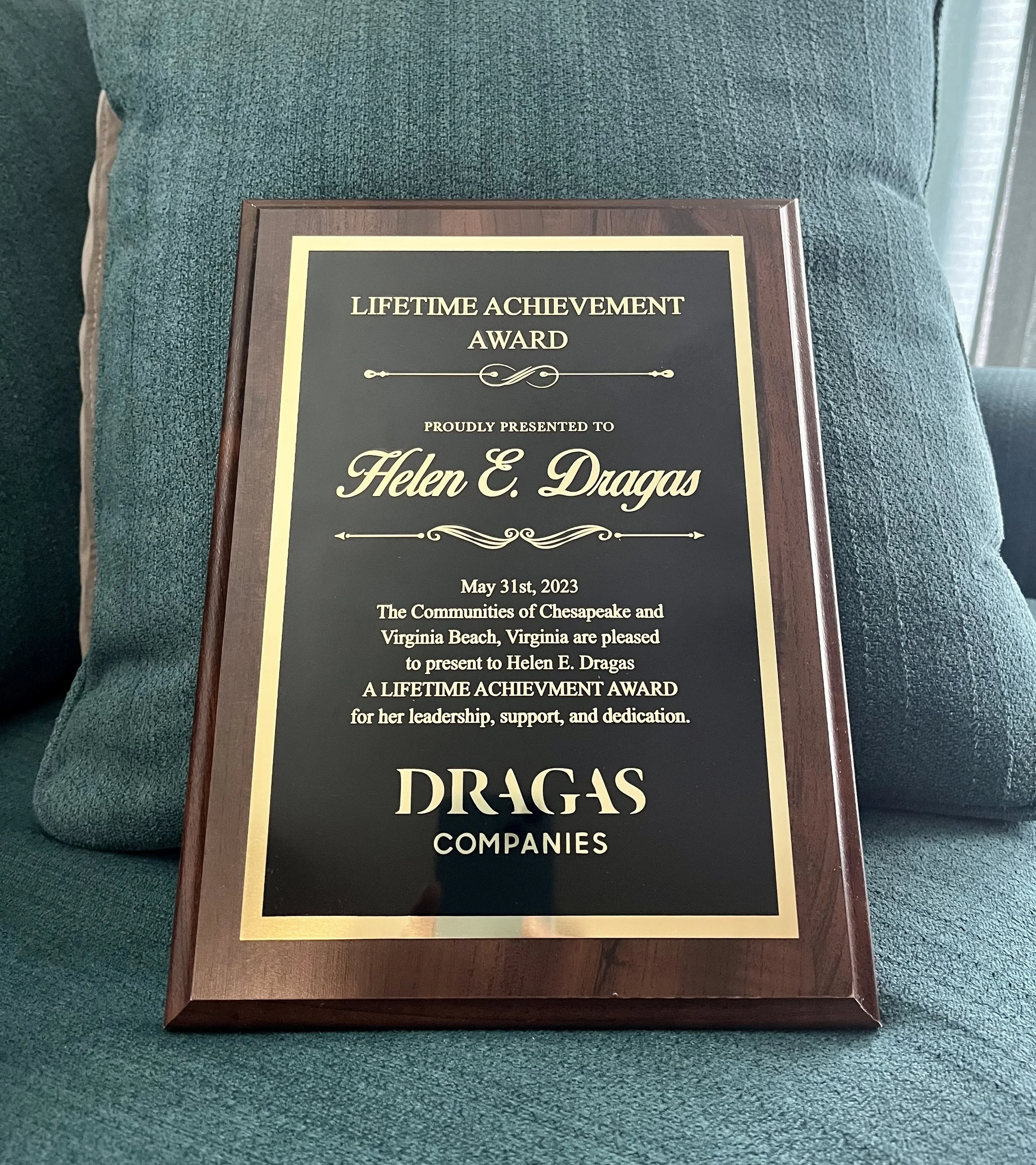
On May 31, 2023, Earthly Infrastructure® proudly presented Helen Dragas with a Lifetime Achievement Award, honoring her enduring contributions to the built environment, her commitment to ethical development, and her legacy of leadership across Coastal Virginia

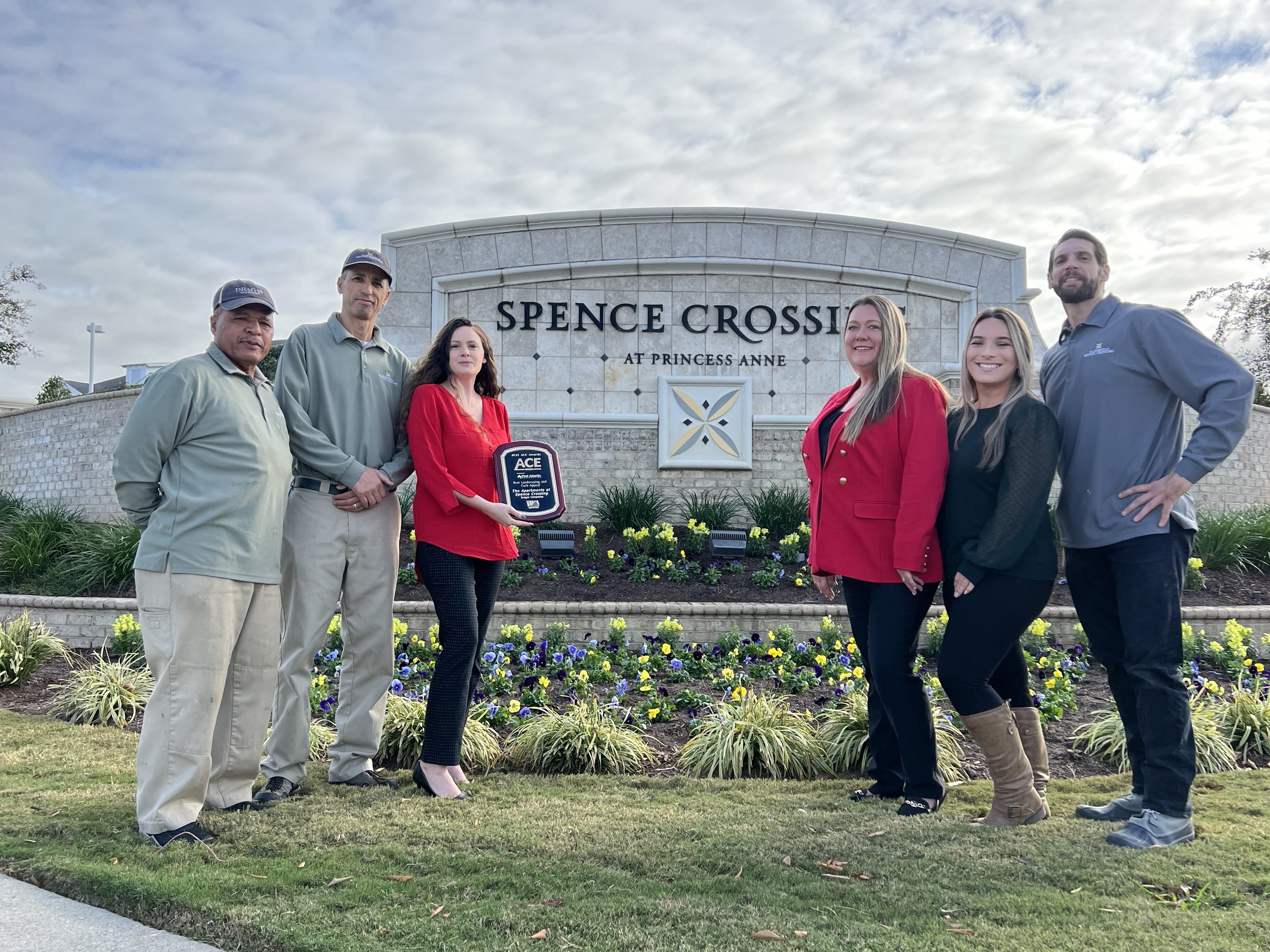
I first met Helen years ago at the Dragas Companies’ annual Christmas party while working on her Spence Crossing development in Virginia Beach. Even in a festive setting, she carried herself with the commanding presence of a public official—measured, composed, and unmistakably in charge. She didn’t just walk into a room; she owned it. There was an air of confidence and competence about her that signaled leadership at every turn. It was immediately clear she was a builder who expected more—not just from the work, but from the people around her.

Her job sites were orderly, her expectations sharp, and her team deeply aligned with the regulatory process. For someone like me, now leading Earthly Infrastructure® and advocating for greater builder accountability statewide, that early exposure to her leadership shaped my view of what responsible development looks like.

Today, Helen Dragas continues to leave her mark—not only through legacy communities but through new projects rising in Chesapeake. Crestfield at Centerville is a forthcoming neighborhood of single-family homes on generous 10,000-square-foot lots, offering thoughtfully designed floorplans priced from the mid $500,000s. Just a few miles away, Grayson Commons is set to break ground in 2025—a mixed-use development that will include two- and three-bedroom townhomes, garages, and lakefront walking trails. These projects speak to the evolution of growth in Hampton Roads: compact, livable, and grounded in long-term neighborhood value.

What makes these projects especially relevant to today’s land use conversations is their procedural integrity. The approval process for Grayson Commons included careful coordination with Chesapeake City Council, addressing infrastructure conditions like turn-lane improvements and internal road connectivity. It’s this attention to transportation impact, drainage, and design that separates Dragas from many operating in today’s increasingly crowded development space. She builds with the future in mind—socially, physically, and civically.

Outside the private sector, Helen Dragas has been a visible force in Virginia’s civic and educational institutions. She served as a member—and eventually rector—of the University of Virginia Board of Visitors, helping steer one of the Commonwealth’s flagship public universities through complex governance challenges. Her board service reflects a belief that leadership in housing must also be matched by stewardship in education, governance, and policy. Few regional developers can claim such a balanced presence across public and private life.

She has also supported initiatives related to housing access, workforce development, and regional economic competitiveness—often without seeking the spotlight. In doing so, she has helped shape not only the built environment, but the broader social infrastructure that makes a city livable. Helen Dragas embodies the idea that true development is as much about people as it is about parcels—and her work continues to influence how Coastal Virginia grows, adapts, and thrives.

In a time when the word “developer” is often used without regard to licensure, liability, or policy fluency, Helen Dragas remains a model of what the title should demand. Her work respects the code. Her teams understand the stakes. And her communities are proof that quality homebuilding and responsible policy alignment are not mutually exclusive. As Virginia continues to confront growth, affordability, and regulatory reform, builders like Helen will be essential to getting it right.